Thematic Brief – Social Norms
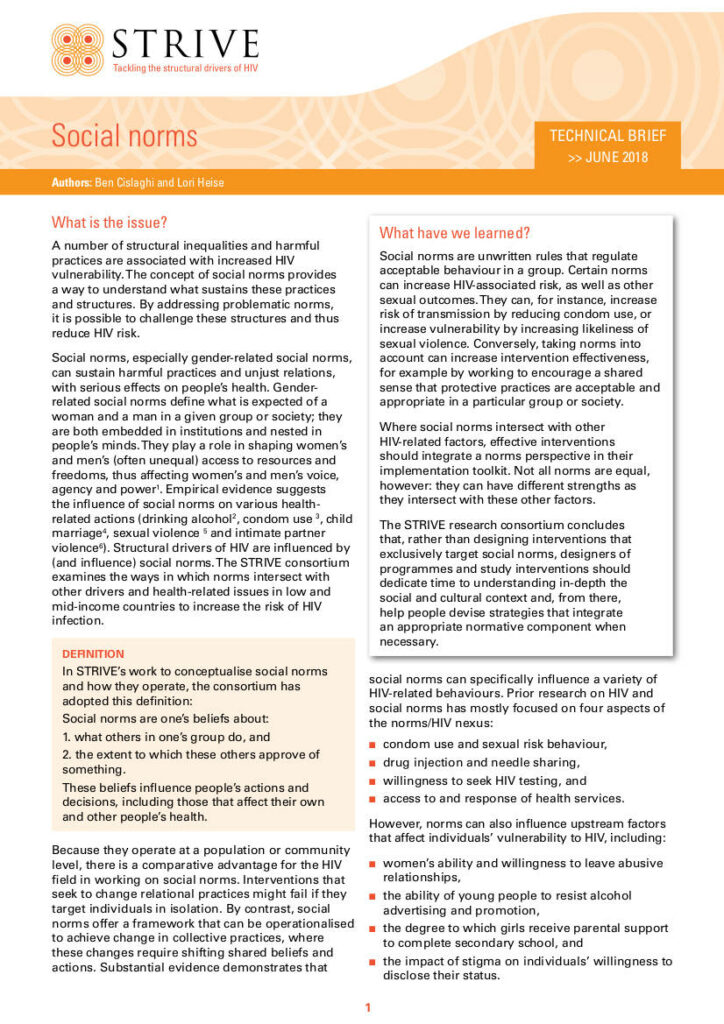
What is the issue?
A number of structural inequalities and harmful
practices are associated with increased HIV vulnerability. The concept of social norms provides a way to understand what sustains these practices and structures. By addressing problematic norms, it is possible to challenge these structures and thus reduce HIV risk.
Social norms, especially gender-related social norms, can sustain harmful practices and unjust relations, with serious effects on people’s health. Gender related social norms define what is expected of a woman and a man in a given group or society; they are both embedded in institutions and nested in people’s minds. They play a role in shaping women’s and men’s (often unequal) access to resources and freedoms, thus affecting women’s and men’s voice, agency and power 1 . Empirical evidence suggests the influence of social norms on various health related actions (drinking alcohol 2 , condom use 3 , child marriage 4 , sexual violence 5 and intimate partner violence 6 ). Structural drivers of HIV are influenced by (and influence) social norms. The STRIVE consortium examines the ways in which norms intersect with other drivers and health-related issues in low and mid-income countries to increase the risk of HIV infection.
Related Publications: